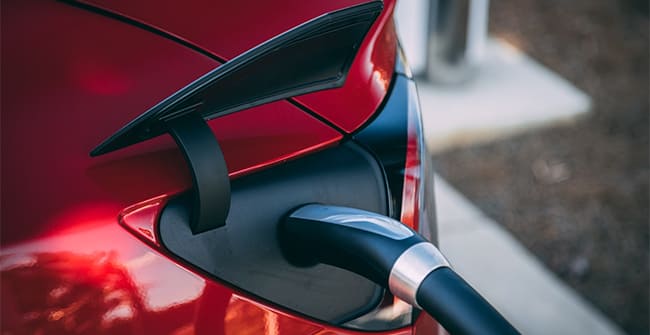
The five major standard interfaces are based on the Chinese standard of GB/T 20234, the North American standard CCS1 of J1772, the European standard CCS2 of IEC 62196, the Japanese standard of CHAdeMO and the Tesla standard of NACS. Due to the inconsistent charging interfaces in various places, the design of electric vehicle charging interfaces needs to meet the charging standards of different regions or markets. Otherwise, charging will not be possible, and the requirements of their standards and regulations will not be met.
Chinese GB/T 20234 Charging standard
The reference standard parts of China's electric vehicle standard charging interface and handshake circuit are GB/T 20234 and GB/T 18487.1, respectively. The maximum voltage of the AC charging interface is three-phase 440V AC, and the maximum current is 63A AC; In contrast, the maximum voltage of DC charging is 1000V DC, the maximum current is 300A DC under natural cooling, and the maximum current is 800A DC under active cooling. (Active cooling is a new addition to the revision and has not been released yet.)
European CCS2 IEC62196 Charging standard
The voltage range in Europe is similar to the Chinese standard. The charging interface CCS2 is the same as the American standard CCS1, but some differences remain. The main difference is that standard household electricity in Europe is 230 volts, almost twice the voltage used in North America, so there is no Level 1 charging in Europe. The European standard AC maximum voltage is 480V AC, and the maximum current is 63A; the maximum DC voltage is 1000V DC, and the maximum current is 200A DC (based on the 2014 version of the data, the new 2022 version of the standard has not yet been obtained).
American CCS1 J1772 Charging standard
North American charging standards are mainly used in the United States and Canada. The maximum AC voltage is 240V AC, and the maximum current is 80A AC; the maximum DC voltage is 1000V DC, and the maximum current is 400A DC.
Tesla NACS Charging standard
The common charging standard in the United States is J1772. The only exception is Tesla, which has developed its own dedicated charging interface for charging Tesla electric vehicles. Tesla announced its own NACS standard on November 11, 2022, and welcomes everyone to use it.
Japanese CHAdeMO Charging standard
CHAdeMO is a DC plug jointly developed by five Japanese automakers. Starting in 2010, they attempted to promote it as a global standard, but it has not been widely adopted.
Conclusion:
Generally speaking, various charging standards apply to different countries and regions, and the interfaces, communication protocols, and certification requirements are also different, which has brought some troubles to the production and sales of automobiles and the production and construction of charging piles. Car manufacturers and charging facility manufacturers and operators need to select appropriate charging interfaces based on the standard requirements of different regions to provide products that meet regulatory requirements and compatibility in the regions where they are sold, and to serve users better.

