What is the DC Charging Method?
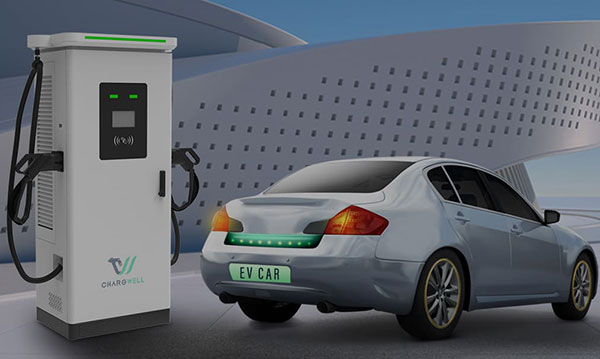
A direct current (DC) charger, also known as direct charging, is an instrument that gives out electricity to recharge batteries in an electric vehicle (EV). Unlike typical AC-based chargers, which require conversion from alternating current to direct current, these devices carry the direct flow of electric charge that can rapidly fill up your EV’s battery.
How They Work
DC chargers are designed to draw high-voltage direct current electricity from off-board sources without endangering your vehicle’s battery systems and safely transfer it there. By directly linking with your battery, they skip conversion processes, resulting in reduced charging durations compared with level 1 or level 2 AC chargers.
Quick Charging Ability
One of the main advantages of using DC fast charging is that it can recharge your EV battery to expand its range quickly and within a short period. A DC fast charger may offer up to 200 miles in as little as 15-30 minutes, depending on how much power is being supplied by the charging station and the capacity of a vehicle’s battery.
Wide Range Compatibility
Most modern electric vehicles have been designed with compatibility features for direct current fast charging, therefore conforming to standards like the Combined Charging System (CCS) or CHAdeMO protocols. Nevertheless, always refer to your car’s owner's manual just so you are sure about its DC charging capability and any specific equipment or adapters needed.
How to Use and Maintain Your DC Charger
Getting Started
Using a Direct Current charger is not complicated. First, make sure that the charger suits your electric vehicle—read through your user guide or find information on its manufacturer's website. Next, locate where you will insert the charger into your EV, typically at either the front side panel or rear bumper.
Charging Process
When you plug in the charger, a light or display shows that charging has started. The time required to fully charge the battery depends on the level and speed of the charger, which may take between twenty minutes and several hours. It would be most convenient to charge it at home overnight.
Maintaining Your Charger
When not in use, keep your DC charger in a neat and dry place. Regularly check the wires for damage or wear and tear. If your charger is dirty, clean it with a wet cloth—but don't put it in water. A good-quality DC charger can last for several years if properly taken care of.
Optimizing Charging
For the fastest charging times, go for the fastest Level 3 DC chargers available. Preconditioning (running the climate control system for a few minutes before plugging in) may speed things up a bit. Additionally, charge during off-peak hours whenever possible to save on electricity costs.
Choosing the Right DC Charger for Your Needs
Consider Your Vehicle's Requirements
The first step involves understanding how an electric vehicle charges itself. Most EVs have either a Level 1 (120V) or Level 2 (240V) onboard charger. As long as your car supports level 2 charging, you will need to get that type of DC charger instead of level 1.
Check Your Charging Needs
How and where will you mostly charge your EV? If it is just for overnight charging at home, a basic Level 2 charger might be enough. Nevertheless, one should seek DC fast chargers with a minimum rating of 50kW for faster charging away from home.
Consider the Rate of Charge
The rate of charge is denoted in kilowatts (kW). The higher the kW rating, the faster it charges. While most residential level 2 chargers vary between 3.3 kW to 19.2 kW, public DC fast chargers top out at around 350 kW, enabling ultra-fast charging.
Different Connector Types Should Be Kept In Mind
Ensure that your DC charger has the correct connector type for your EV make and model. The major connectors are CHAdeMO, CCS (Combined Charging System), and Tesla’s proprietary connector. Check that your vehicle’s inlet port corresponds with the charging cable.
Plan For The Future
While shopping around, go for a charger that can accept a higher charge rate than what your current electric car requires. This way, you can future-proof your purchase if, later on, you upgrade to a more powerful electric vehicle model.
Final Thoughts
Thus, we have completed this guide on DC chargers. Don’t worry about being intimidated by their complex names. They are very easy to use and essential for keeping your vehicle charged while on the move. You will become an expert at plugging them in anywhere if you learn how to do it once. Take our word for it when we say that these small portable devices will come in handy every time you need to charge your EV; they can be your best friend from now on as far as charging is concerned. Now, hit the road again without worrying about a low battery!